
6 Types of Kitchen Countertops Compared for Long Island Kitchens
This guide compares six countertop materials that show up in Long Island kitchens. Here is how each one holds up and what it takes to care for it.
Your countertop gets more use than almost anything else in the kitchen. It takes heat, spills and a lot of wiping every day. The right material depends on how you cook and how much upkeep you want.
Below are six common types of kitchen countertops. For each one we cover how it holds up, what care it needs and where it works best.
1. Quartz
Quartz is an engineered stone. It is made mostly of ground quartz mixed with resin and pigment. The color and pattern stay consistent from slab to slab. What you see in the sample is close to what you get.
Quartz is not porous, so it does not need sealing. Coffee, wine and oil wipe right off. The weak spot is heat. A hot pan set right on it can scorch or discolor the resin, so use a trivet.
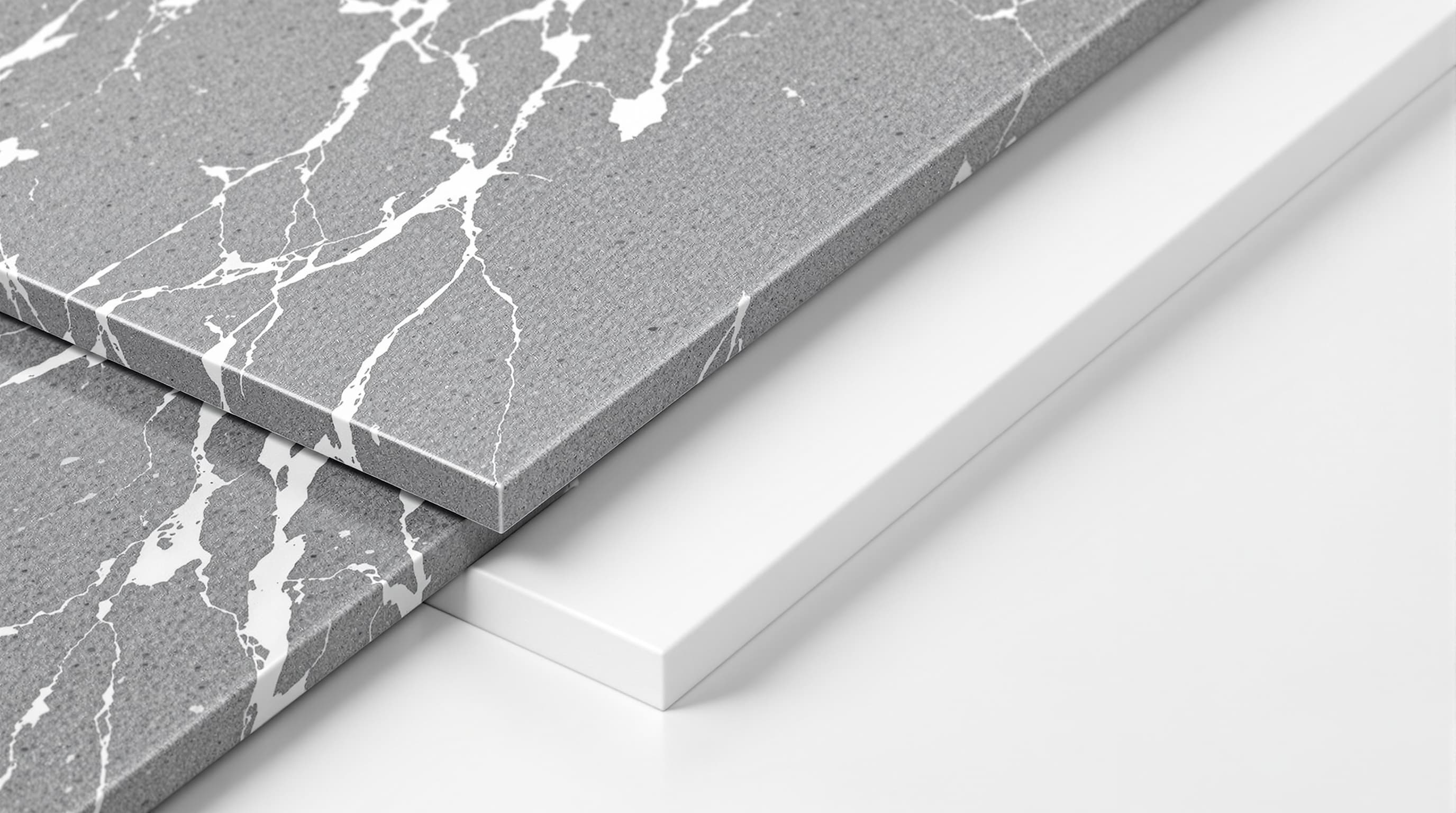
Most makers also say quartz is not for outdoor use. Long sun exposure can discolor it. Indoors, it is a good fit for a busy family that wants low upkeep.
2. Granite
Granite is natural stone cut from a quarry. Every slab is different, so try to pick your actual slab. It handles heat well and is hard to scratch.
Granite is porous, and some types soak up more than others. Most granite counters need a sealer to resist stains. How often depends on the stone. A simple test is a few drops of water. If the stone darkens within a few minutes, it is time to reseal.
3. Quartzite
Quartzite is a natural stone that forms when sandstone is put under heat and pressure. It often looks like marble but is much harder. That makes it a popular pick for people who want the marble look with less worry.
Quartzite still needs sealing. It also tends to cost more because it is slow to cut and finish. One tip is worth knowing. Some stones sold as quartzite are softer than true quartzite. Ask your fabricator to test a sample before you commit.
4. Marble
Marble has the soft veining many people want in a classic kitchen. It stays cool to the touch, which bakers like. It is also softer and more reactive than granite or quartzite.
Acids like lemon juice, vinegar and wine can etch marble. Etching leaves a dull spot even on a sealed counter. A honed finish hides etching better than a polished one. If you choose marble, plan on it showing some wear over time.
5. Porcelain slab
Porcelain slabs are large, thin panels of fired porcelain. They resist heat, stains and scratches very well. They also hold their color in sunlight.
On many porcelain slabs the pattern is printed on the surface. A cut edge can show a different color inside, so the edge profile needs planning. Porcelain can also chip at the edges if something hard hits it. It takes a fabricator who has worked with it before.
6. Butcher block
Butcher block is made from strips of hardwood glued together. It warms up a kitchen and usually costs less than stone. Many people use it on an island and put stone on the other counters.
Wood needs more care than stone. Oil it on a regular schedule and wipe up water quickly, especially near the sink. Scratches and small burns can be sanded out, which stone does not allow.
How to choose the right countertop for your kitchen
Start with how you use the kitchen. If you cook a lot and want little upkeep, quartz or porcelain makes sense. If you want natural stone and do not mind sealing, look at granite or quartzite.
Then think about the size of the room. A smaller Cape Cod or ranch kitchen needs less material. That can put a stone you love within budget. A small kitchen remodel is often a good time to choose a better surface.
Look at full slabs, not just small samples. Veining and color can change a lot across one slab. Choose the counter and the kitchen flooring together so the colors work as a set.
A long run or a large island may need a seam. Ask where the seams will fall before the slab is cut.
Pick the edge and sink style early
The edge profile changes how a counter looks and feels. An eased edge is a simple square edge with softened corners. It is the easiest to keep clean. A rounded edge like a bullnose is gentler on hips and on small kids.
Decide on the sink before the slab is cut. An undermount sink sits below the counter, so crumbs wipe straight in. It is common with stone, quartz and porcelain. The fabricator needs your sink model to make the cutout.
What affects the cost of a new countertop
The material is only part of the price. Fabrication and the edge profile add to it. So do sink cutouts and removing the old top. A waterfall edge on an island uses more slab and more labor.
Most stone and quartz counters are 3 cm thick, a little over an inch. Thinner 2 cm slabs cost less. They often need a built-up edge to look right.
Prices vary a lot from job to job. The best way to compare is a written quote for the same layout in two or three materials. Our kitchen countertop installation page lists the materials we work with. For more planning help, see our kitchen remodel guides.
Want to see a few materials side by side in your own kitchen? Call (631) 565-8128 to set up a free in-home consultation.
Frequently asked questions
Quartzite and porcelain are two of the hardest countertop surfaces. Quartz is also very tough and never needs sealing. Marble and butcher block show wear the fastest.
Natural stone needs a sealer. That includes granite, quartzite and marble. Quartz and porcelain do not need sealing. Butcher block is usually oiled instead.
It is best not to. High heat can scorch or discolor the resin in quartz. Use a trivet or a hot pad every time.
Start Your Project
Ready to Transform Your Kitchen?
Get a free design consultation and detailed estimate. No pressure, no obligation.
Kitchens Done
Average Rating
Callback Time