
Reface or Replace Your Kitchen Cabinets? How to Decide on Long Island
Your cabinets look tired, but the kitchen mostly works. That is the moment most people start asking whether new doors would be enough. Here is how to tell.
Cabinets take up more of a kitchen than anything else, so they set the look of the whole room. When they start to feel dated, the obvious fix is to rip them out. That is not always the right call.
A lot of Long Island kitchens sit in Capes, ranches and colonials built from the 1950s through the 1980s. Plenty of those still have the original cabinets, or a set put in during a later remodel. Some of those boxes are solid and square. Others have had decades of leaks under the sink. Which one you have decides most of this.
What refacing actually means
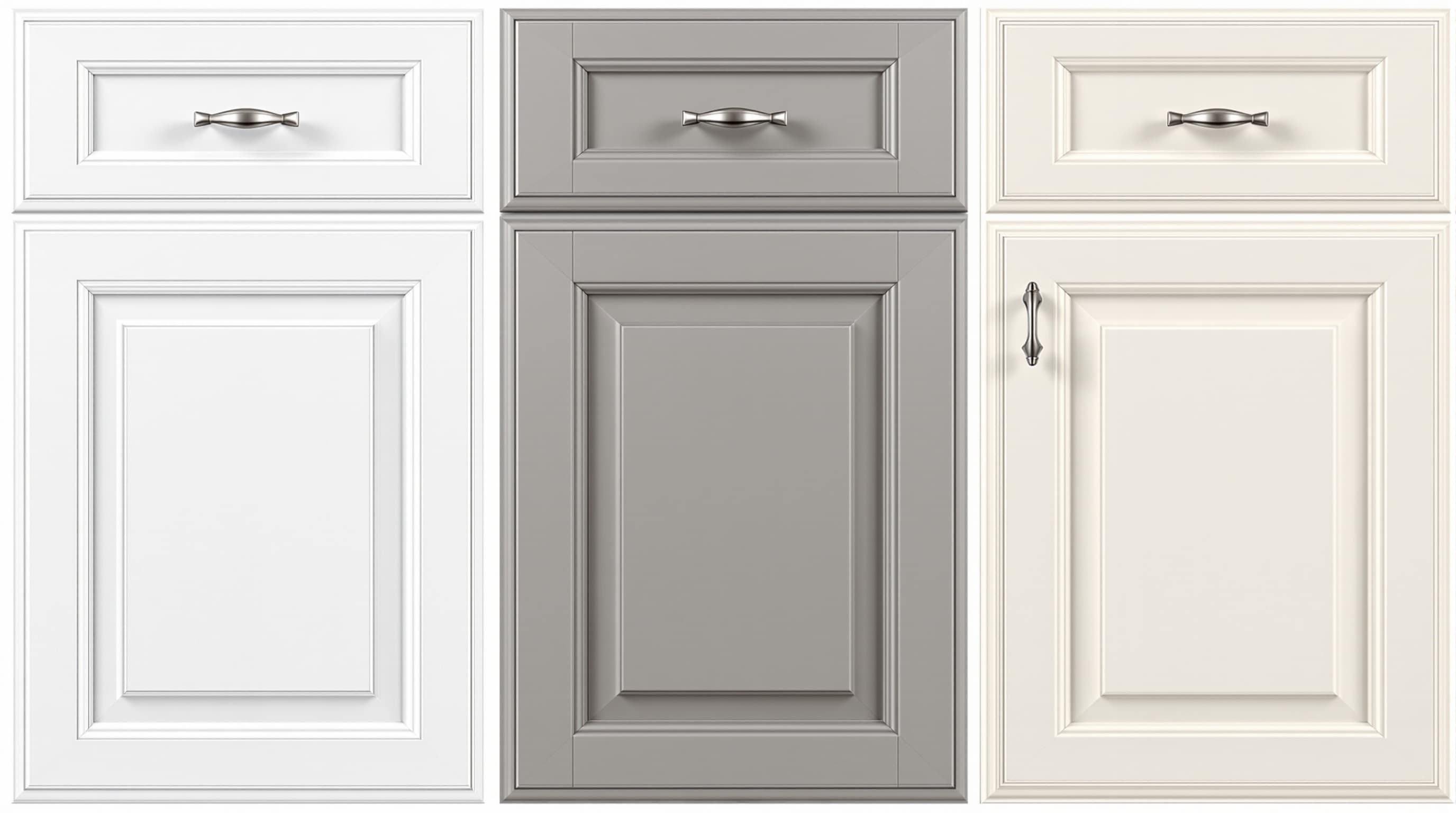
Refacing keeps the cabinet boxes where they are. The face frames, the part you see around each opening, get covered with a new veneer or refinished. Then the doors and drawer fronts are replaced with new ones, usually along with new hinges, drawer slides and hardware.
The layout does not change. The sink, the range and the refrigerator stay where they are. So do the countertops, unless you decide to replace them at the same time.
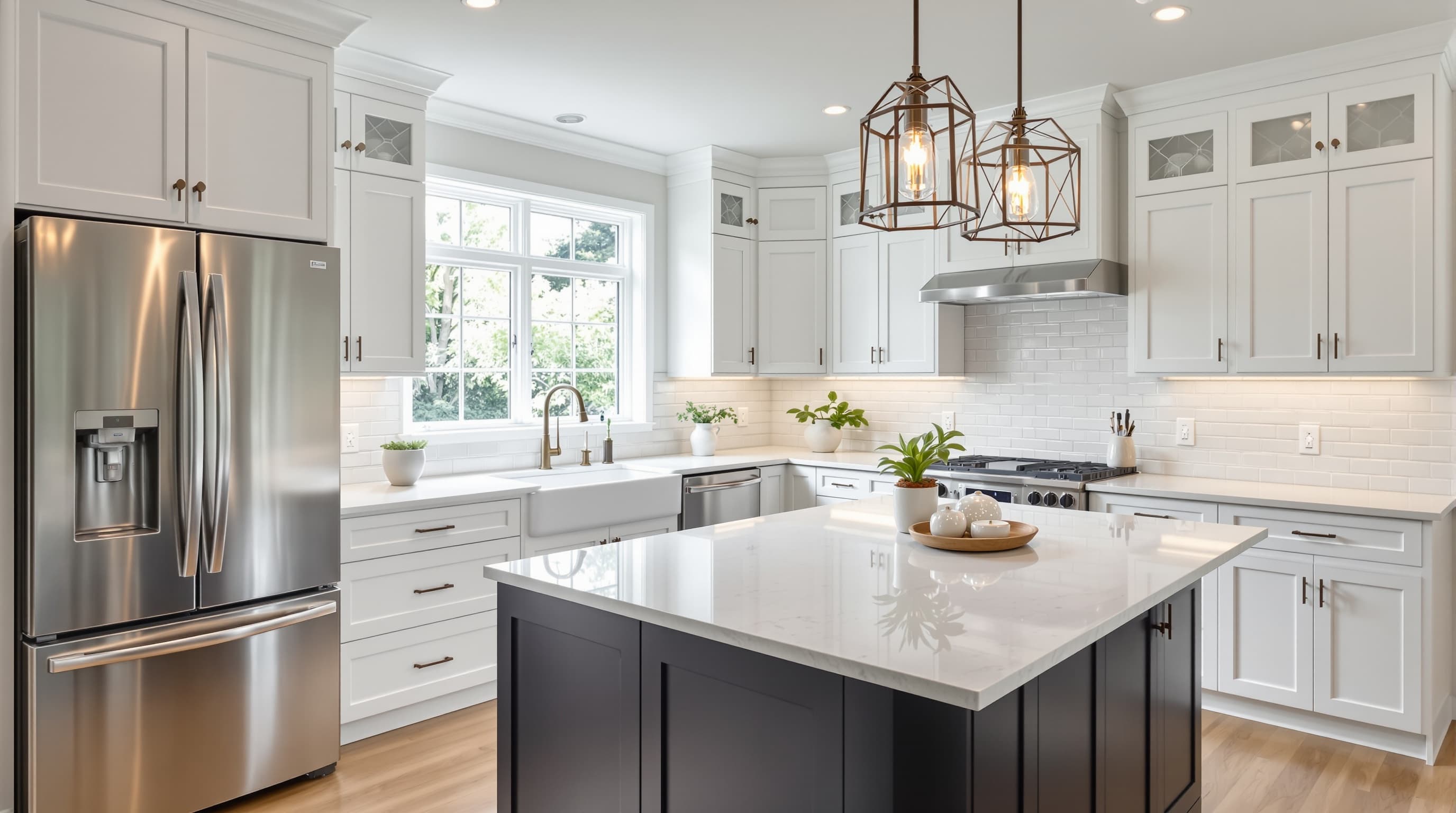
Replacing means the old boxes come out and new ones go in. That opens up everything: the layout, the cabinet sizes, an island, taller uppers that run to the ceiling. It is also a much bigger job, closer to a full kitchen remodel than a facelift.
Refacing vs replacing at a glance
| Refacing | Replacing | |
|---|---|---|
| Cabinet boxes | Stay in place | Removed and replaced |
| Layout | Same as today | Can change completely |
| Countertops | Can stay or be replaced | Almost always replaced |
| Kitchen out of use | Usually days | Usually weeks |
| Relative cost | Lower | Higher |
| Best for | Sound boxes and a layout you like | Damaged boxes or a layout that does not work |
When refacing makes sense
Refacing is a good fit when most of these are true:
- The boxes are square, dry and solid, with no swelling or soft spots.
- You like where everything is and cook comfortably in the space.
- You have enough storage, or can add it with pull-outs inside the existing boxes.
- The problem is mostly looks: dated doors, worn finish, old hardware.
- You want the kitchen back in use quickly.
Older face-frame cabinets are often good candidates. The frames give the new doors something solid to hang on, and the boxes were usually built heavier than some later particleboard lines. Our page on kitchen cabinet refacing covers the door styles and finishes that go on in a refacing job.
When new cabinets are the better call
Some kitchens are not worth refacing, even if the budget points that way. Replacement is usually the better choice when:
- The sink base has water damage, swollen panels or mold.
- Shelves sag, boxes are out of square, or doors never line up no matter how you adjust them.
- You want an island, a different work triangle or a wall opened to the dining room.
- There is a soffit above the uppers and you want cabinets that run to the ceiling.
- You are changing appliance sizes, like going to a wider range or a counter-depth refrigerator.
The layout is the big one. Refacing locks in the floor plan you have. If the kitchen feels cramped or the sink and range fight for the same corner, new doors will not fix that. In a tight Cape or ranch kitchen, a small kitchen remodel that rethinks the layout often gets more out of the room than any cabinet makeover.
Things Long Island homeowners should check first
Lead paint on painted cabinets
If your house was built before 1978 and the cabinets have been painted, there may be lead paint on them. Federal rules require lead-safe work practices for renovation that disturbs painted surfaces in pre-1978 homes. Ask about it before anyone starts sanding or prying off old trim.
What is under the sink
The sink base tells you more than any other cabinet. Empty it, use a flashlight and press on the floor of the cabinet. If it flexes or is stained, that box at least needs replacing, and it may be a sign of what the rest look like.
Permits
Refacing by itself usually does not need a building permit. Once a project moves plumbing, adds electrical circuits or takes out a wall, it does. Unincorporated areas file with the town, and incorporated villages run their own building departments. If your project is heading that way, our page on kitchen remodeling in Nassau County explains how it works there.
How a refacing job usually goes
It starts with measuring every door and drawer opening. New doors and fronts are made to those sizes, so nothing happens in the kitchen until they are ready.
On install, the old doors, drawer fronts and hardware come off. The face frames and any exposed cabinet sides get their new veneer or finish. Then the new doors are hung, the drawer fronts go on, and the hinges and pulls are adjusted so the gaps line up.
This is also the easy time to add things that make a kitchen work better without moving any boxes. Think soft-close hinges, roll-out shelves in the base cabinets, a pull-out trash bin or a new crown molding along the top. Ask for those up front so they are measured with everything else.
What about the countertops?
If your counters are in good shape and the color still works with the new doors, keep them. That is one of the reasons refacing goes fast.
If you want new counters anyway, refacing and new tops pair well. The boxes need to be level and strong enough to carry the weight of stone or quartz, so that gets checked before the slab is ordered. Our kitchen countertops page lists the materials that work with either route.
Painting, refacing or replacing
There is one more option people ask about: painting the cabinets you have. Painting keeps the same doors, so a raised-panel door stays a raised-panel door. It changes the color, not the style.
Refacing changes the style. You can go from an old raised-panel oak door to a clean shaker or a flat slab door, and add soft-close hinges and new hardware at the same time. Replacing changes everything, including the boxes and the layout. Our cabinet styles guide walks through the door styles if you are still deciding on a look.
A simple way to decide
- Check every box, starting with the sink base. Note any damage.
- Write down what bugs you about the kitchen. Sort it into looks and layout.
- If most of the list is looks and the boxes are sound, refacing is worth pricing.
- If the list is mostly layout, storage or damage, price new cabinets.
- If you are not sure, get both priced on the same visit so you compare the same kitchen.
Most people know which way they lean once they have looked inside every cabinet and split their list in two. If you would like someone to look at the boxes with you, call (631) 565-8128 to set up a visit.
Frequently asked questions
Refacing keeps your existing cabinet boxes in place. The visible frames get a new veneer or a fresh finish, and the doors, drawer fronts, hinges and hardware are replaced. The layout stays the same.
Open every door and look inside. The boxes should be square, dry and solid, with shelves that are not sagging. Check under the sink closely. Swollen particleboard, soft spots or old water stains usually mean the boxes should be replaced.
Yes. Many people reface and put in new counters at the same time. The boxes have to be level and strong enough to carry stone or quartz, so that gets checked before anything is ordered.
Refacing on its own usually does not involve structural, plumbing or electrical changes, so it typically does not need a building permit. If the job grows to include moving the sink, adding circuits or taking out a wall, check with your town or village building department.
Start Your Project
Ready to Transform Your Kitchen?
Get a free design consultation and detailed estimate. No pressure, no obligation.
Kitchens Done
Average Rating
Callback Time