
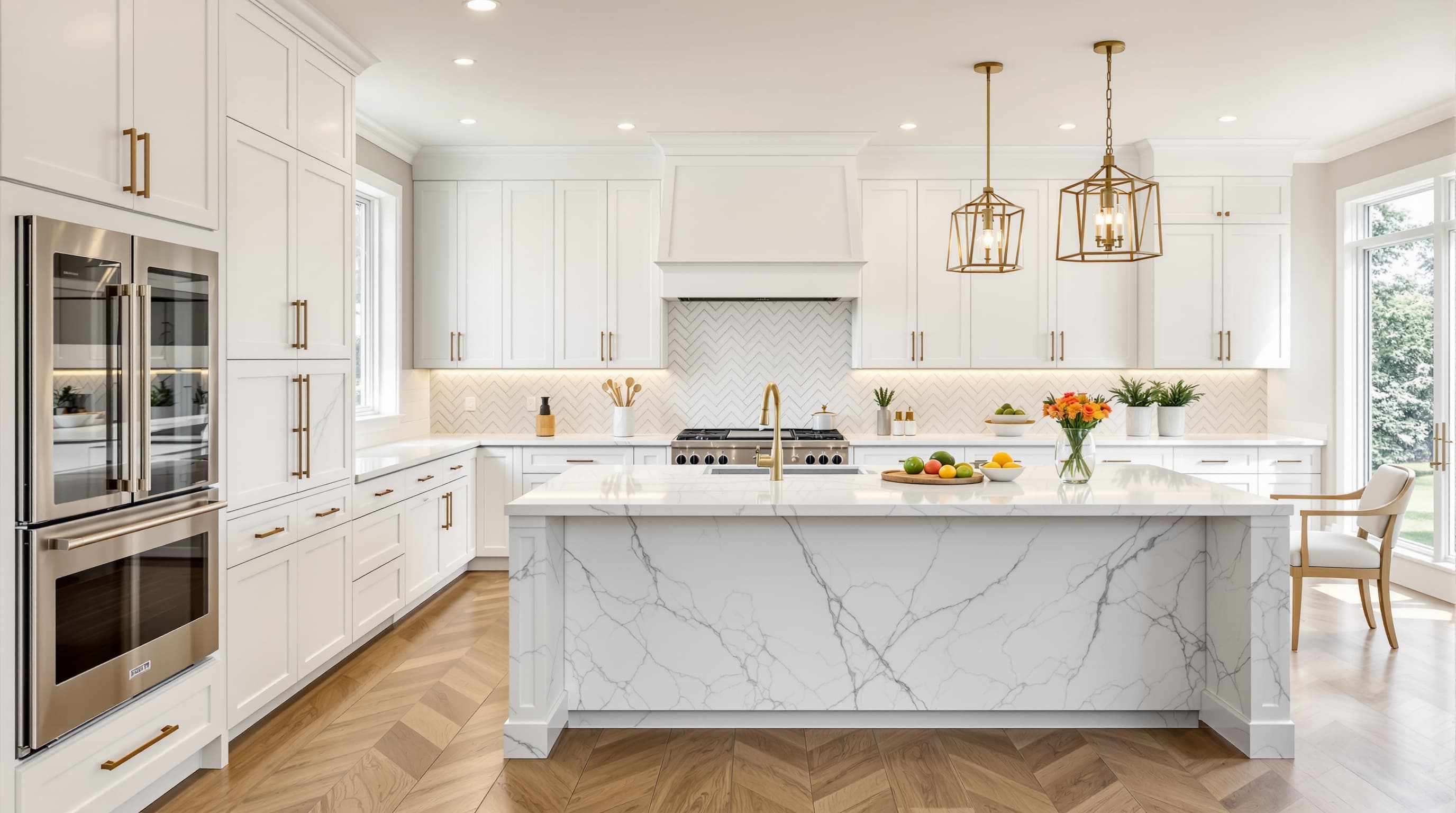
Kitchen Renovation on Long Island: The Complete Guide
What to expect from a Long Island kitchen renovation — permits, costs, timelines, and how the region's housing stock shapes what is possible.
What kitchen renovation on Long Island involves: gut vs cosmetic
The first question in any Long Island kitchen renovation conversation is scope. Gut renovation and cosmetic renovation are not just price tiers, they are fundamentally different projects with different permit requirements, timelines, and contractor qualifications. We do both kinds of kitchen renovation on Long Island, so every estimate starts there.
A cosmetic kitchen renovation keeps the existing layout intact. The sink stays where it is, the range stays where it is, and the walls stay in place. Work focuses on visible surfaces: cabinet replacement or refacing, new countertops, backsplash tile, flooring, lighting, and appliances. A well-executed cosmetic renovation can transform the look and feel of a kitchen entirely without touching a single pipe or load-bearing beam. These projects typically cost $18,000 to $35,000 on Long Island and do not require building permits unless electrical panels are being upgraded. If a new floor is part of the plan, this guide to kitchen flooring that stands up to spills and traffic walks through the main options.
A gut renovation strips the kitchen to the studs and subfloor. Everything comes out, including plumbing rough-in, electrical wiring, insulation, and in many cases the ceiling. This is the required approach when you are converting a galley kitchen to an open layout, moving the sink to an island, upgrading from gas to induction, adding a range hood that vents through the exterior, or correcting hidden water damage or knob-and-tube wiring. On Long Island, gut renovations typically run $35,000 to $65,000 and require building permits in Nassau and most Suffolk jurisdictions.
Nassau and Suffolk permit requirements for kitchen renovations
Permit requirements in Nassau and Suffolk County vary by municipality and by the scope of work. The basic rule is straightforward: if you are moving, adding, or significantly altering plumbing, electrical, HVAC, or structural elements, you need a permit. Cosmetic work on existing systems typically does not require a permit.
In Nassau County, permit applications go through the appropriate village or town building department. Nassau County has a large number of incorporated villages, each with its own building department and permit process. Common permit fees for kitchen renovation work typically run $500 to $2,000 depending on the scope and the municipality. Plans are required for any structural changes, including load-bearing wall removal, which typically requires a licensed engineer's drawing. Some Nassau County villages require a licensed architect to file plans for structural work regardless of the square footage involved.
In Suffolk County, each of the ten towns has its own building department. Permit timelines are generally faster in Suffolk than Nassau, but structural work still requires documentation and inspection. If your kitchen renovation involves any changes near the property's plumbing stack, upgrading an electrical panel to support induction cooking, or removing a wall that touches an exterior, budget for permit fees and factor in two to four weeks of review time.
Long Island's housing stock and what it means for your renovation
Long Island's dominant housing stock was built between 1947 and 1975. These are Cape Cods, colonial two-stories, and ranch homes, with kitchens designed for a post-war lifestyle that put cooking in a separate room at the back of the house. Most of these kitchens are small (typically 100 to 150 square feet), closed-off from the living space, and laid out as galley kitchens or L-shapes with limited counter space and no room for an island.
The demand for open-concept kitchen layouts is strong throughout Nassau and Suffolk County, and the most common renovation goal is removing the wall between the kitchen and an adjacent dining room or living area. This is often structurally complicated. In many 1950s and 60s Long Island colonials and ranches, the wall between the kitchen and the adjacent room is load-bearing. Removing it requires temporary support columns during construction, a structural engineer's plan, and a permit. The added cost for load-bearing wall removal on Long Island typically runs $3,000 to $8,000 on top of the renovation itself.
Older homes also tend to have outdated wiring and plumbing that does not meet current code. Knob-and-tube wiring from the 1950s cannot support modern kitchen appliances safely, and many Long Island homes still have galvanized steel water supply pipes that corrode and restrict flow. A gut renovation is the opportunity to correct all of this at once, which is why gut renovations often pencil out better than expected when you are already pulling walls.
Kitchen renovation cost ranges on Long Island ($18,000 to $65,000)
Long Island kitchen renovation costs are higher than national averages, driven by labor rates, permit costs, and material availability. The estimates below reflect typical projects completed in Nassau and Suffolk County.
| Scope | Typical Range | What's Included |
|---|---|---|
| Cosmetic refresh | $18,000–$28,000 | Cabinet fronts, countertops, backsplash, appliances, lighting |
| Mid-range full renovation | $28,000–$45,000 | New cabinets, quartz countertops, plumbing fixtures, tile, flooring |
| Open-concept conversion | $40,000–$55,000 | Wall removal (if non-load-bearing), full new kitchen, permits |
| Full gut with structural work | $50,000–$65,000+ | Load-bearing wall removal, new plumbing run, electrical upgrade, custom cabinetry |
Kitchen renovation timeline on Long Island: 4 to 12 weeks
The most reliable way to understand your timeline is to work backward from cabinet delivery. Semi-custom cabinets ordered from an LI showroom typically arrive in four to six weeks. Custom cabinets run eight to fourteen weeks. Until cabinets are on-site, most of the finish installation cannot be completed.
Design, selection, and permit filing
Cabinet selections, countertop material, layout finalization, permit application if required
Permit approval (if required)
Nassau County structural permits can take three to four weeks; cosmetic work bypasses this step
Demolition
Existing cabinets, countertops, flooring, and walls removed and hauled
Rough work (plumbing, electrical, framing)
New rough plumbing, electrical rough-in, any structural modifications completed and inspected
Cabinet installation and countertop templating
Cabinets installed, countertop template measured
Countertop fabrication and install
Stone fabricated, installed, and sealed
Finish work (tile, fixtures, appliances)
Backsplash, plumbing fixtures, appliances, trim, and punch list
Choosing a licensed contractor in Nassau and Suffolk County
Both Nassau and Suffolk counties require kitchen contractors to hold a Home Improvement Contractor (HIC) license. Before signing any contract for kitchen renovation work on Long Island, verify the contractor's license number through the appropriate county office. In Nassau, verify at Nassau County Consumer Affairs. In Suffolk, verify at the Suffolk County Department of Labor, Licensing, and Consumer Affairs.
Beyond the HIC license, look for a contractor who carries general liability insurance of at least $1 million per occurrence and workers' compensation coverage for all employees. Request a certificate of insurance naming you as additional insured before any work begins. This protects you if a worker is injured on your property or if workmanship damage occurs.
For full gut renovations and open-concept conversions, look for a contractor with direct experience with Long Island's older housing stock. Post-war construction methods, the prevalence of plaster walls, and the variety of basement configurations in Nassau and Suffolk County homes create conditions that contractors unfamiliar with the area may handle poorly. Local experience matters.
Cabinet brands available at Long Island showrooms
Long Island has a well-developed kitchen showroom market in both Nassau and Suffolk counties. Most showrooms carry a range of cabinet lines from stock to semi-custom to custom, and many have designers on staff who can create full kitchen layouts based on your space dimensions.
Semi-custom cabinets are the most popular choice for Long Island kitchen renovations in the $25,000 to $50,000 range. Brands like Kraftmaid, Fabuwood, Dura Supreme, and Wolf offer a wide range of door styles and finishes, are built to order in standard and non-standard sizes, and typically ship in four to six weeks. Stock cabinets (available immediately at big-box stores) are suitable for budget renovations but have limited size options that often require filler strips. Custom cabinetry from local cabinet makers is an excellent option for challenging layouts or high-end finishes, with lead times of eight to fourteen weeks.
Frequently asked questions
Kitchen renovation costs on Long Island range from $18,000 for a cosmetic update (new cabinet fronts, countertops, backsplash, appliances) to $65,000 or more for a full gut renovation with structural changes, new plumbing runs, and custom cabinetry. The Long Island labor market and material costs run about 20 to 30 percent higher than national averages, primarily due to contractor licensing requirements, permit fees, and union labor rates in Nassau County.
It depends on the scope. Cosmetic work — painting, replacing countertops, swapping appliances, and installing new cabinet fronts — typically does not require a permit. Anything that involves moving walls (especially load-bearing walls), relocating plumbing, or upgrading electrical panels requires a permit from Nassau County or the applicable village building department. Permit fees typically run $500 to $2,000 depending on the scope, and plans prepared by a licensed professional may be required for structural changes.
A cosmetic renovation keeps the kitchen's layout, plumbing, and electrical in place and focuses on visible surfaces: cabinets, countertops, flooring, backsplash, and fixtures. A gut renovation strips the kitchen to the studs, allows full reconfiguration of plumbing and electrical, and is required for open-concept conversions, moving the sink or range, upgrading from gas to induction, or correcting water damage and outdated wiring behind the walls. Gut renovations take longer and require permits; cosmetic renovations can often be completed in two to four weeks without a single inspection.
A cosmetic kitchen renovation on Long Island typically takes two to four weeks from demolition to final installation. A full gut renovation typically runs six to twelve weeks depending on permit timelines, custom cabinet lead times, and the complexity of structural or plumbing changes. Nassau County permit approval can add two to four weeks to the schedule for structural work. Planning for cabinet delivery is the most common source of delays — semi-custom cabinets typically run four to six weeks; custom cabinets can run eight to twelve weeks.
Both Nassau and Suffolk counties require contractors performing home improvement work to hold a Home Improvement Contractor (HIC) license. In Nassau County, the license is issued by Nassau County Consumer Affairs. In Suffolk County, it is issued by the Suffolk County Department of Labor, Licensing, and Consumer Affairs. Always verify your contractor's license number before signing a contract. Hiring an unlicensed contractor can void your homeowner's insurance coverage for work-related damage and create liability exposure.
Long Island has a strong showroom market for kitchen cabinetry. Stock and semi-custom cabinet brands widely available include Kraftmaid, Merillat, Fabuwood, Wolf, and Diamond. For mid-to-upper ranges, brands like Omega, Dura Supreme, and Wellborn are available through local kitchen design showrooms. Custom cabinetry is available through local cabinet makers in Nassau and Suffolk County, typically at lead times of eight to fourteen weeks and a significant price premium over semi-custom. Most Long Island homeowners in the $25,000 to $50,000 renovation range choose semi-custom for the balance of quality, lead time, and cost.
Yes. The dominant housing stock in Nassau and Suffolk County was built between the late 1940s and early 1970s — Cape Cods, colonial two-stories, and ranch homes from the Levittown era. These homes typically have small, closed-off galley kitchens that were never designed for the open-concept layouts that today's buyers expect. Converting a galley kitchen to an open concept requires removing the wall between the kitchen and a dining room or living space, which is often a load-bearing wall. Load-bearing wall removal requires an engineer's drawing, a building permit, and a temporary support structure during construction. This single step is the most common surprise cost in Long Island kitchen renovations.
Get a free kitchen estimate
Nassau and Suffolk County. We respond within 2 hours.
Schedule Consultation Try Our Cost CalculatorQuestions about your renovation?
Licensed in Nassau and Suffolk County. HIC licensed and insured.
(631) 565-8128Start Your Project
Ready to Renovate Your Long Island Kitchen?
Get a free design consultation and detailed estimate. Nassau and Suffolk County. HIC licensed and fully insured.
Kitchens Done
Average Rating
Callback Time